
By Kevin Tran
We’ve all had that moment, staying up at 2 a.m. and staring at a textbook or screen, rereading the same material repeatedly. Nevertheless, the concepts still aren’t sinking into your brain.
I’ve especially realized this lesson: taking breaks is crucial as I start my sophomore year. I’m taking my first two AP classes. With the heavier workloads and much more rigid material, I thought the only solution was to spend more time studying. However, I’ve quickly learned that this is wrong.
Many students, including myself, think that the time spent and the amount learned go in a linear path. As a result, people often force themselves to study for hours without taking breaks. In reality, research shows that how you study matters far more than how long you study.
In 2021, a study published in CBE Life Sciences Education found that what mattered for exam performance wasn’t just time spent studying but also the strategies students used.
“Importantly, students who spent a larger proportion of their study time on active strategies tended to perform better on exams,” Elise M. Walck-Shannon, a biology professor at Washington University, said.
This shows that it isn’t about putting in more hours, but how you spend them. One way to do this is through active studying, such as testing yourself or explaining a concept in your own words, which has been shown to support learning more than passive review methods such as rereading notes or textbooks.
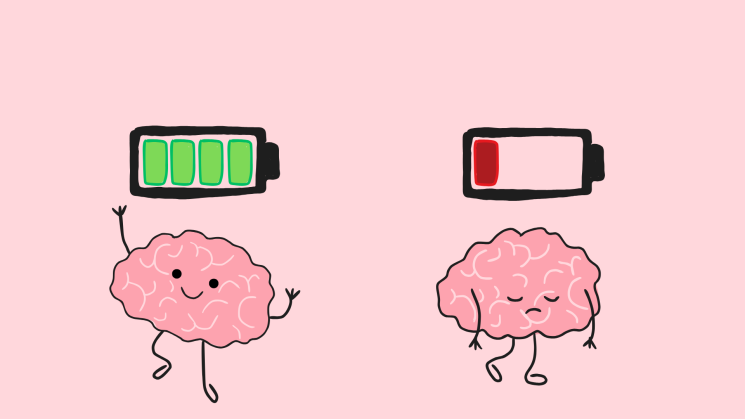
That being said, this study method takes a lot of effort. That’s where taking breaks comes in. By giving your brain short pauses, you can build back your focus so you can keep those effective strategies without burning out.
Without a good break, you’ll end up rereading the same notes for hours without absorbing any of the information. Through revisiting, you’re just recognizing what you’re learning, which is different from actually learning.
“Often, students feel that they learn more from cognitively superficial tasks than from cognitively effortful tasks,” Walck-Shannon said. “As one example, students may feel that they have learned more if they reread a text passage multiple times than if they are quizzed on that same material… In contrast to students’ judgments, many effortful tasks are highly effective for learning.”
This connects with my idea that rereading creates the illusion of learning, but it doesn’t actually produce retention.
Taking breaks doesn’t just apply to school; athletes, musicians and even workers in offices perform better when they take breaks. Rest is part of the process of improvement.
Athletes sometimes schedule recovery breaks so their muscles can rebuild stronger. Musicians practice in shorter sessions so they can play with more focus and precision. Even in workplaces, a small pause helps build up productivity and creativity. In every field, breaks give people the chance to recharge and come back better than before.
In the end, taking breaks isn’t a waste of time. It’s about using time wisely, whether it’s studying for an exam, practicing an instrument or working at a job. Breaks allow you to recharge, refocus and perform at your best. The smartest learners aren’t the ones who work nonstop, but the ones who know when it’s time to take a pause.