By Bethany Nguyen
For many students, stress is a feeling all too familiar. With demanding academics, sports, extracurricular activities, part-time jobs and social and family life, teens can often get caught up in this world of constant movement. While some turn to doomscrolling as their go-to decompression method, studies show that listening to specific types of music is one of the simplest and most effective ways to calm down the brain.
Have you ever noticed that hearing lo-fi music sometimes makes you feel more relaxed? Similar genres can have a soothing effect on brain activity, making them powerful tools for students dealing with anxiety, stress or overstimulation.
An example of anxiety-reducing music is lyricless classical music. According to research from the National Institutes of Health, its melodic rhythms trigger the parasympathetic nervous system, which is the part of the brain responsible for “rest and digest” functions. By triggering the relaxation area of the brain, classical music can reduce cortisol levels–levels of the body’s main stress hormones–and alleviate anxiety.
Aside from tunes like Debussy’s “Clair de Lune,” lab-generated tracks created by teams of sound therapists are commonly used as a coping mechanism for anxiety and stress. The ambient band, Marconi Union, worked together with sound therapists and researchers to create what many neuroscientists have claimed to be the most calming song, “Weightless.”
These specially designed tracks utilize binaural beats, which combine two slightly different frequencies to create a single harmony that slows heart rate and promotes relaxation. Many have reported calming effects when experiencing intense anxiety, even using similar tracks to help them fall asleep.
Music therapy. These two words essentially sum up this concept of using music to manage emotional instability or high stress levels. While the data backs the facts, destressing music is customizable to the individual. Some may prefer acoustic music, while others prefer electronically-generated music if they find it works better for them. What remains constant in all of these sounds, however, is that they are just that–sounds. Noise without words or lyrics to distract the brain and cause further stress–that is the key to minimizing anxious brain activity.
These methods can be seen in all different types of settings today. In classrooms, teachers will often play soothing music without lyrics to promote healthy concentration during independent work time, which are called “sleep tracks.” “Sleep tracks” consist of calming, repetitive tunes that are used in countless households where insomnia is prevalent.
While music cannot replace therapy or be the solution to all mental health challenges, it should not be overlooked as an effective strategy to manage anxiety, stress or overstimulation. Its impact is powerful and its accessibility is appealing.
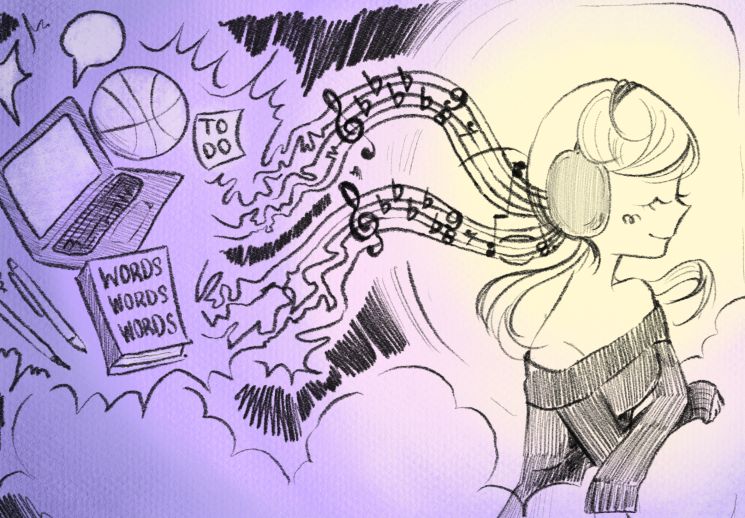
So whether you’re feeling overwhelmed, stressed out by AP classes or your brain is yearning for a break, try shutting down your computer and slip on your headphones. Take a moment to pause, press play and let the music do its work.