
By Katherine Rasmussen
Do you ever wonder why your older sibling always seems so responsible, or why the youngest always gets away with everything? According to the birth order theory, your place in the family may play a major role in shaping your personality.
First introduced by Austrian psychologist Alfred Adler in the early 20th century, birth order theory suggests that siblings grow up with different experiences in the same family, and these differences can influence how they think, behave and relate to others. Though the theory has its critics, many psychologists and researchers believe there are noticeable patterns linked to birth order.
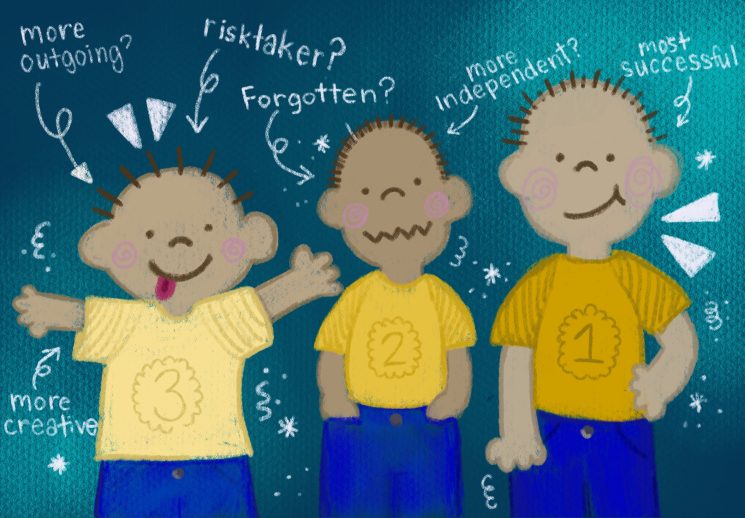
Older siblings are often described as responsible, organized and driven. As the first to arrive in the family, they get undivided attention from their parents early on. This can lead to a sense of importance but also pressure to meet high expectations. Many firstborns are seen as natural leaders, and some even take on a “third parent” role. According to a study published in the Journal of Research in Personality, firstborns often score higher in conscientiousness, a personality trait linked to self-discipline and long-term success.
In contrast, middle children are usually sandwiched between the high-achieving older sibling and the more pampered youngest. They are sometimes called the “forgotten” ones, but that doesn’t mean they are without strengths. Because they receive less direct attention, middle children often become independent and skilled at navigating social situations. They may also rebel or work harder to carve out a unique identity separate from their siblings.
The youngest in the family often enjoy more freedom and relaxed parenting. As a result, they may develop a more playful and outgoing personality. Youngest children are frequently seen as fun-loving, attention-seeking and creative. They may be more likely to take risks or choose unconventional paths. While they benefit from a more casual upbringing, they may also struggle to be taken seriously, especially by older siblings who continue to see them as the baby of the family.
Only children, who grow up without siblings, often share many traits with firstborns. They are typically mature, self-motivated and comfortable interacting with adults. Without siblings to compete with, only children may develop a strong sense of self and independence. At the same time, they might also feel added pressure from being the sole focus of their parents’ expectations.
Of course, personality is never shaped by birth order alone. Parenting style, age gaps between siblings, family dynamics, culture and life events all play a role. No theory can fully explain the complexity of human behavior, and not everyone fits neatly into a category. Still, many people recognize pieces of themselves in these patterns.
Whether you are the responsible firstborn, the adaptable middle child or the free-spirited youngest, your place in the family might be one of the hidden forces behind how you see the world. So the next time you find yourself in a classic sibling argument, keep this in mind — it might be more about birth order than who left the dishes in the sink.