
By Katherine Rasmussen
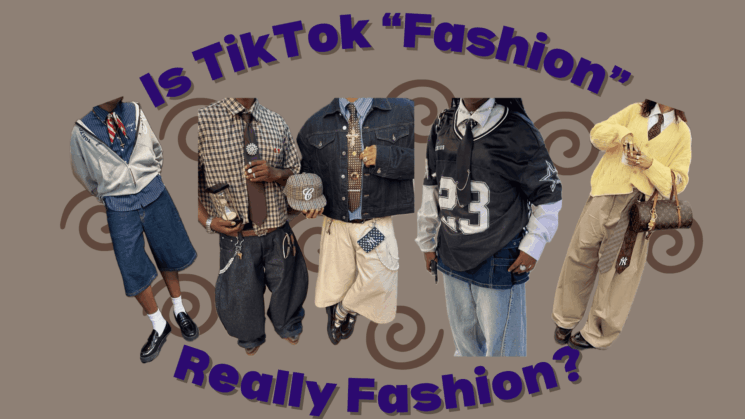
If you spend time on TikTok, you might notice something about the “fashion” content. It is not really fashion in the traditional sense. Instead, it is what I think of as TikTok fashion. A lot of the outfits are labeled as creative or unique but are often made from the same ideas repeated over and over. Layering a sports jersey with a tie, throwing random thrifted pieces together or stacking accessories until it somehow looks good has become the standard for what gets attention.
What I find interesting is how similar many of these outfits can be. Scroll through a few pages on the “For You” page, and you start seeing the same combinations again and again. Cropped cardigans over long sleeves, vests over hoodies, oversized sweaters paired with patterned skirts; these outfits are framed as personal style, but they follow patterns that TikTok seems to favor. The creators are different, but the formula stays the same.
WHAT IS TIKTOK FASHION?
TikTok fashion is often designed for the camera rather than real life. Many outfits are chosen to look visually interesting in a fifteen-second transition video or mirror clip. That layering of unusual pieces might work for a video but could feel awkward to wear outside your room. The goal is usually to make something that performs well on TikTok, not to showcase long-term style.
WHAT IS DIFFERENT?
One of the biggest differences between TikTok fashion and fashion through the years is the role of intention. The 1950s brought structured silhouettes and polished looks that reflected social norms and elegance. Even streetwear in the 1990s and 2000s developed around music, culture, and identity. These trends often took months or years to develop and reflected more than just what looked good on camera. TikTok fashion, on the other hand, develops almost instantly and is often more about following a trend than expressing a personality.
Another difference is repetition versus experimentation. Historical fashion often had rules but also allowed room for creativity. People mixed fabrics, tried new cuts, or added accessories in ways that felt personal. TikTok fashion has creativity, but it is highly patterned. Certain combinations get repeated endlessly because they perform well online. What is framed as originality is often just an iteration of the same idea.
Another thing I have noticed is how quickly TikTok declares something “unique.” A slightly unexpected combination can get lots of praise, and then that exact outfit idea shows up everywhere within days. Originality gets flattened into trend-following almost immediately. TikTok fashion is less about personal experimentation and more about following what is currently popular on the app.
TRENDS VS. SELF-EXPRESSION
I am not saying there is anything wrong with this. Trends can be fun, and experimenting with clothes is always a good way to try new things. What I find interesting is how repetition is celebrated as originality. Many creators are experimenting with what works for content rather than developing a personal style. Real fashion usually comes from intention and expression, not just from what gets likes.
I think TikTok fashion could be more about personal expression. Layering random thrifted pieces or pairing unusual items does not automatically make an outfit creative. Real creativity comes from trying combinations that feel authentic, not just from following a TikTok formula. Right now, TikTok fashion is less about standing out and more about blending in while pretending to be different.
That is why it often looks similar across accounts. TikTok creators are not bad at fashion, they are just creating TikTok fashion. The focus is on what performs well on the platform rather than what reflects personal style. Watching it side by side with historical fashion trends makes it clear that TikTok outfits are part of a fast-moving, performance-driven culture rather than a slow-evolving form of expression.