
By Katherine Rasmussen
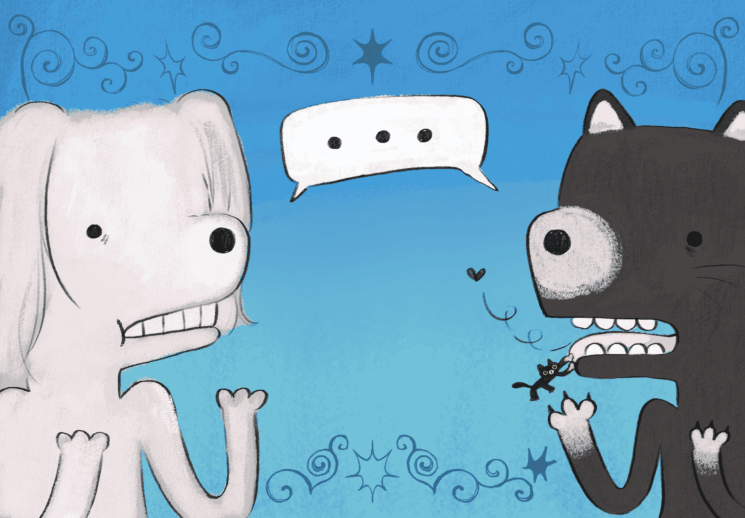
Everyone knows it. That moment when a conversation dies, the air gets heavy and suddenly everyone is very interested in their phone, the floor or literally anything except each other. Awkward silence — no words that make people panic more than they probably should.
Awkward silence happens when a pause in conversation feels uncomfortable, not because anything bad happened, but because we think something is supposed to be happening. No one is talking, and instead of letting the quiet exist, our brains start spiraling.
Did I say something wrong? Should I say something? Are they judging me?
The silence itself is not the problem. The meaning we attach to it is.
People get uncomfortable with silence because that’s how we are conditioned. From a young age, we are taught that conversations should flow smoothly and constantly. If there is quiet, it must mean boredom or tension. Especially in social settings such as school classrooms, group chats or hanging out with friends, silence can feel like a failure. It is the idea that we are responsible for filling the space, even when there is nothing wrong with it being empty.
Social pressure makes it worse. We live in a world where everything is fast, loud and nonstop. There is always music playing, notifications buzzing or someone talking. Silence feels unfamiliar, and unfamiliar things make people uneasy. When the noise stops, we are left alone with our thoughts, and for a lot of people, that is uncomfortable.
Awkward silence also shows more when people care about how they are being perceived. If you want someone to like you or feel comfortable around you, silence can feel high stakes. You do not want them to think you are boring or awkward, so you rush to say anything, even if it is random or forced. Ironically, that usually makes things more awkward.
But silence is not automatically bad. Sometimes it just means both people are thinking. Or tired. Or comfortable enough not to be in conversation every second.
Some of the best moments with friends are quiet ones, sitting next to each other, doing homework, listening to music or even just existing in the same space. We do not call those awkward because we have decided they are allowed.
So what makes a silence awkward? Usually fear. Fear of judgment, fear of rejection, fear of not being enough. The silence becomes a mirror reflecting our insecurities back at us. Instead of asking why it is quiet, we ask what it says about us.
Maybe awkward silence is not something to avoid, but something to rethink. Not every pause needs to be filled. Not every moment needs commentary. Silence does not always mean something is wrong. It might just mean nothing needs to be said.