
By Khue Tran
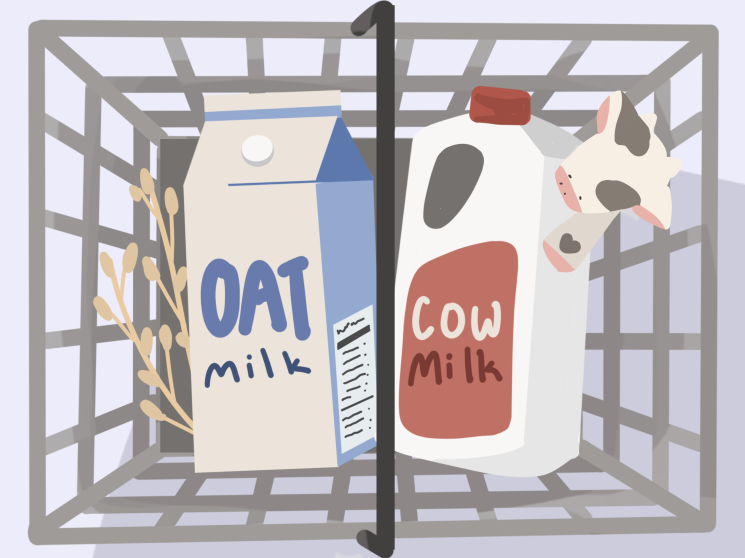
In recent years, oat milk has become a popular substitute for dairy milk. With its healthy benefits, sustainable processes and influence in ongoing trends, this beverage has seen continuous increase in demands despite being more expensive than cow milk.
But is it really the best substitution? Even amidst its rising impact, there are many who state oat milk is not worth all the hype. Today, I will be debunking all the myths and claims regarding this plant-based beverage to see whether you should continue consuming it.
Sustainability
According to TedEd, oat milk proves to be the more environmentally sustainable option because it requires less water usage, greenhouse gas emissions, and takes up less land during its process. While plant-based milk can be made by growing the crop and processing the product, cow milk must be made by raising the cow, growing its food, and processing the product.
This additional step seems to be the center of all the issues surrounding the sustainability of the product. For example, in the process of making cow milk, water is used to feed the cows, grow its crops, and used as an ingredient, accumulating roughly 120 liters of water per glass of milk, while oat milk only requires water during its oat-growing process and as an ingredient, using roughly 5-10 liters of water per glass.
Health
Maintaining a healthier diet is one of the biggest reasons consumers, especially young adults, are switching to oat milk. According to the National Library of Medicine, this beverage theoretically contains less fat, more unsaturated fatty acids and more dietary fiber as compared to animal-based whole milk.
However, the majority of oat milk found in stores contains additional ingredients that are known to be harmful to our health. This plant-based milk can be made with just oats and water, but the oat milk sold by familiar brands such as Oatly, Califia and Silk contains ingredients such as Calcium carbonate, canola oil, and sugar. While ingredients like Calcium carbonate, which are added to increase the calcium content of the beverage, can bring back more health benefits; canola oil and sugar are added for a better user experience and can actually bring more harm to us.
But this does not mean oat milk is entirely off the race, many companies provide options with minimal and organic ingredients to match with the consumers needs such as Oatly’s Low-fat Oat Milk that contains no added oil and sugar. Alternatively, consumers can also choose to make oat milk themselves as it doesn’t require complicated instructions.
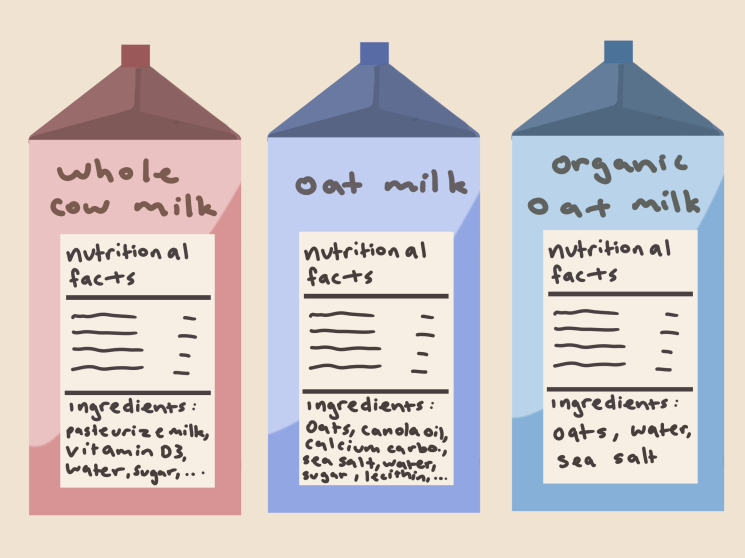
In conclusion, if you came to oat milk for its sustainability, then this is a decision you wouldn’t regret, as this beverage effectively reduces the carbon emissions that are often associated with animal-based products. If you’re interested in its health benefits, be sure to check the ingredients of your drink before you purchase; look for products with only clean ingredients like oats, water and sea salt.