By Christine Garcia & Arielle Nguyen
Assistant Principal of Curriculum Brian Clark issued clarifications earlier this school year that Community Service Cord hours must benefit the “greater community.”
“The original intention behind [the Community Service Cord] is to get kids to do stuff for our community. And by community … we mean outside of Fountain Valley High School (FVHS) … to benefit somebody outside of our campus,” Clark said.
Last school year, the administration recognized that some students or clubs had been participating in on-campus volunteering activities solely for hours or receiving service hours for club meetings, which didn’t fit the Community Service Cord regulations. The overarching goal of this achievement is to maintain and increase the spirit of service, not just for students’ recognition.
To receive the Community Service Cord, students must complete the following: complete 160 community service hours, with the administration recommending 40 hours per year. Additionally, students must receive two recommendations, create a reflection presentation and complete the Service Cord application. Hours are cumulative starting from the summer before ninth grade, and hours earned on overnight trips in which students are sleeping or not engaging in active volunteer work do not count toward the cord.
Service opportunities that fall under the Community Service Cord’s guidelines include assisting in outside businesses and city events. Furthermore, per Clark, fundraisers specifically for clubs and not outside organizations do not count as service hours as these groups would only benefit themselves and not the wider community. However, if a student decides to donate the money that they made to a non-profit, they may receive hours upon the donation.
“We don’t want people just to do something … for hours. So, if they want to beautify the campus, [then do so]. Don’t do it just because we’re giving you hours. Do it because you want to have a beautiful campus,” Clark said. “We’re trying to instill … connections and networking with other groups outside of [FVHS].”
As for who upholds these expectations, club advisors are responsible for managing hours and determining which qualify as volunteer work.
“[Club advisors] are faculty members here on campus … we trust their judgment, and they’re the ones that [students] should be turning to,” Clark said.
These new volunteer clarifications have impacted several clubs on campus such as Ecology Club and Barons’ Garden.
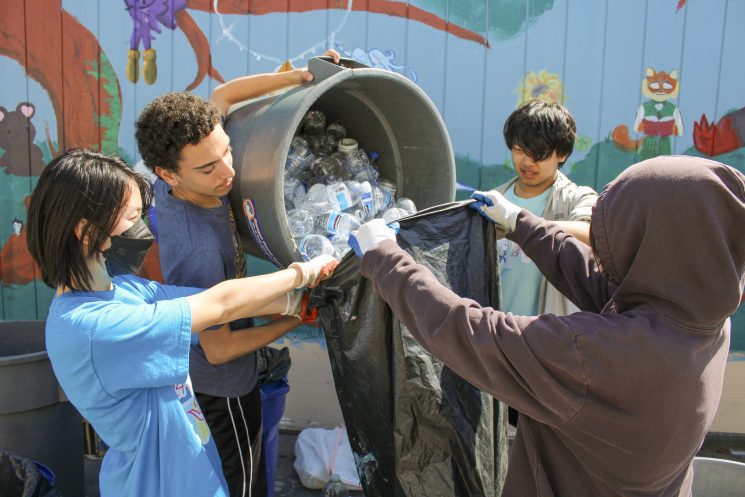
Barons’ Garden club, run by president and junior Suri Nguyen, promotes sustainability on campus, while also helping students find their passion for the environment. Ecology Club, run by president and senior Ethan Kwong, also promotes environmental awareness through their various programs—such as through the garden or their recycling program—in addition to opening discussion about the environment.
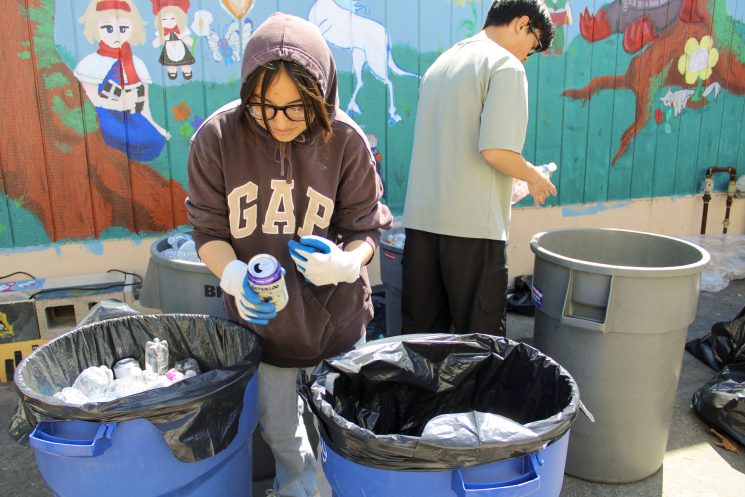
These clubs have been impacted by the clarifications and will no longer be able to offer volunteer hours for their work on FVHS’ campus garden, along with other projects that include beautifying the campus. However, per Clark, Ecology Club’s recycling program is an exception to this rule, as they coordinate the event on their own and ”require extensive planning and organization.”
“If [Ecology Club] is trying to do something like [the recycling program] … that’s fine, we’ll count that [for volunteer hours]. But again, just spending hours in the garden weekly, trying to maintain that garden, is not going to count for hours,” Clark said.
These new clarifications came with major setbacks, as Kwong and Nguyen have noted a decrease in club member participation.
“We definitely lost some members … some members definitely look forward to volunteer hours, because we … used to provide volunteer hours every Friday. We still do, but for only thirty minutes because of the recycling program,” Kwong said.
As of now, these clubs aren’t receiving hours for their gardens because their service does not extend beyond FVHS. For example, the Giving Farm, managed by Westminster High School, grows and sells produce to support others, therefore receiving volunteer hours for their efforts. However, this is attributed to the size and budget of both gardens—the Giving Farm is larger than both clubs’ gardens.
“Clark specified that we weren’t able to receive volunteer hours because we weren’t supporting the school … Westminster High School [receives] volunteer hours for their program [because] they make profit and sell their products,” Nguyen said.
Nguyen confirmed that Barons’ Garden does not have the capacity nor budget to sell their products or afford a bigger and more profitable garden.
Ecology Club and Barons’ Garden are looking for alternative options to increase community involvement. Kwong confirmed that Ecology Club is considering additional outside volunteer activities, such as expanding the recycling program for elementary school students and gathering speakers to educate participating members about environmental issues. However, Barons’ Garden currently does not have alternative plans.
Although the administration has redefined what students can get for service hours, hours from the past will still be collected and counted towards the Service Cord.
“Those hours [from previous years] are going to count,” Clark said. “We’re not going to go back and say, ‘No, you can’t count those hours now.’”