
By Caroline Mora
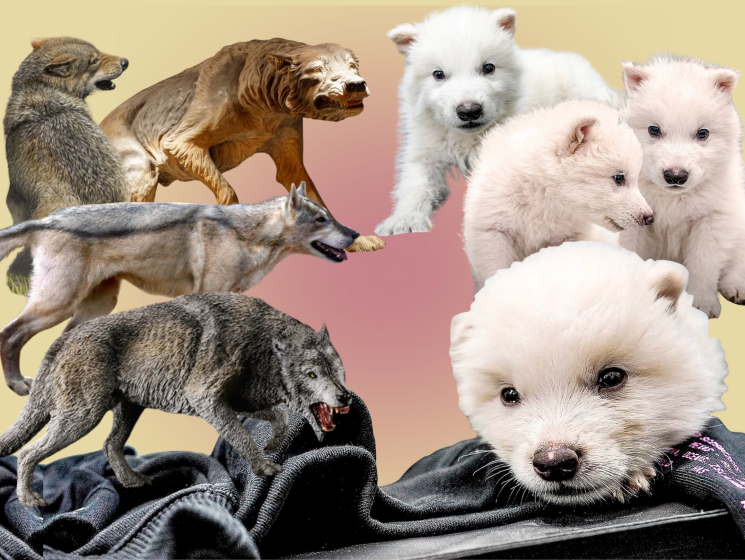
The Americas haven’t heard the dire wolf’s howl in over 10,000 years, but they might soon. An extensive team of scientists at Colossal Biosciences, a company dedicated to de-extinction, has successfully brought back the dire wolf.
Remus, Romulus and Khaleesi are three dire wolf pups that live on a 2,000-acre ecological reserve in the United States. Colossal Biosciences used the DNA of a Grey Wolf and combined it with the DNA extracted from Dire Wolf remains. The team altered fourteen genes in the Grey Wolf genome to replicate that of a dire wolf.
Some argue that the pups aren’t true dire wolves because Colossal Biosciences used a Grey Wolf surrogate and the embryos weren’t born solely from dire wolf DNA. But Beth Shapiro, the company’s chief science officer, disagrees.
“Our mammoths and dire wolves are mammoths and dire wolves by that definition,” Shapiro said. “They have the key traits that make that lineage of organisms distinct.”
These wolves are being raised in semi-captivity. Having minimal contact with humans, they are cared for from a distance, fed a diet of dog food combined with beef, horse, and deer meat, and kept within the reserve’s bounds. They won’t ever be reintroduced to the wild, as Colossal Biosciences plans to study these animals for as long as they live to learn more about de-extinction and filter out any possible bugs.
To learn more about de-extinction and Colossal’s goal, visit: https://colossal.com/