By Katherine Rasmussen
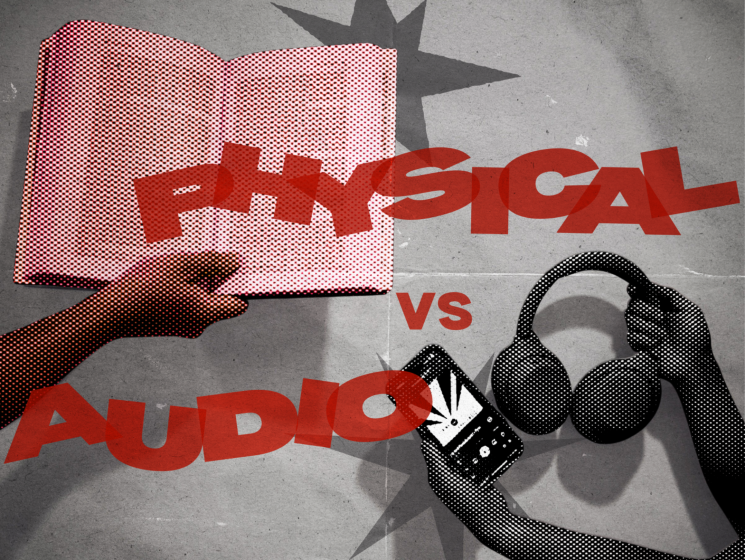
In an age where everything is going digital, from music to movies to even school assignments, it’s no surprise that books have followed suit. Audiobooks are rising in popularity, with people listening while driving, exercising or even falling asleep. I get it, multitasking is appealing. But as someone who truly loves reading, I believe physical books are far better than audiobooks.
MORE PERSONALIZED READING
First of all, physical books offer a deeper, more focused reading experience. When I hold a book in my hands, I’m completely immersed. There are no background distractions or voice narrations that can change the tone or pace of the story. I control how I read, whether I want to pause and reflect on a sentence, flip back a few pages to double-check a fact or underline a quote that sticks with me. With audiobooks, you’re stuck with how the narrator chooses to read. You can’t easily skim, re-read or take notes unless you stop everything and rewind, usually in awkward 15-second chunks.
UNDERSTANDING THE STORY
Physical books also help with comprehension and memory. People who read from physical books tend to remember more and understand better than those who listen to audiobooks. When I read with my eyes instead of my ears, I remember more details, quotes and characters. It’s easier to stay engaged with the story when you’re not tempted to zone out, which can happen all too easily while listening.
STUDY VALUE
Another reason I prefer physical books is that they’re better for studying. When I’m reading for school, I need to highlight, annotate and flip through pages quickly. Try doing that with an audiobook; it’s nearly impossible. Audiobooks might be fine for casual listening, but when it comes to learning, nothing beats a good old-fashioned book.
THE POTENTIAL OF AUDIOBOOKS
That’s not to say audiobooks have no value. They can be helpful for people with reading disabilities or for those who want to make use of time while commuting. But they’re not a replacement for reading. They’re more like a different medium entirely, similar to watching a movie adaptation instead of reading the actual novel. Sure, you get the story, but not the full experience.
OVERALL
In the end, physical books offer a richer, more meaningful way to connect with stories and ideas. They invite us to slow down, think deeply and truly enjoy the art of reading. While audiobooks may be convenient, I’ll always reach for a tangible book because some experiences just can’t be replaced by a pair of headphones.