
By Bethany Nguyen
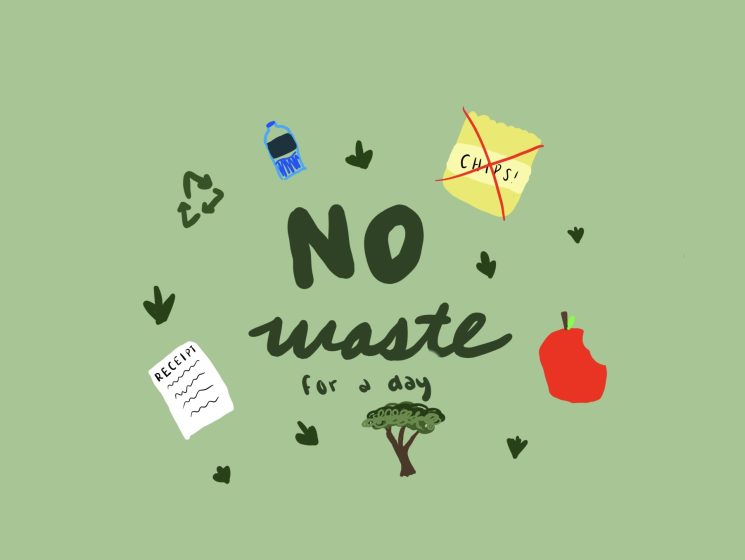
The average American produces nearly five pounds of trash every day, according to the U.S. Environmental Protection Agency. When I first learned this fact, I was shocked. So, I challenged myself to see if I could completely cut out waste from my own daily routine while still enjoying my usual comforts.
The morning started like any other day. I brushed my teeth, got dressed and filled my metal water bottle. My challenge was off to a great start. However, as I reached to grab a bag of Goldfish for my school snack, I hesitated. Thinking about the waste from the packaging, I swapped it for grapes in a reusable container instead.
The real challenge came when I walked into my math class. The assignment was to be done on paper. While technically recyclable, I cringed at how often students use paper without a second thought. The generated waste seemed inescapable.
I snacked on my no-waste grapes throughout the day and by the time lunch rolled around, I was able to go home and make myself a meal. Despite this, I couldn’t help thinking of the hundreds of school lunches made every day and their resulting waste. Plastic containers, juice cartons and disposable utensils flooded my mind as I ate, conscious of the washable dishes I was using.
Still, I wasn’t perfect. Debating whether or not to have a popsicle while studying, my sweet tooth took over, and I mentally winced at the plastic wrapper it came in. I had also needed to purchase a poster board for a project, and with it came an unavoidable receipt.
By the end of the day, I had generated a small handful of waste: a receipt, a paper towel and a popsicle stick and wrapper. It wasn’t exactly “zero” waste, but it was a far cry from the average five pounds.
Trying to live no-waste for a single day opened my eyes to the limitations that make it difficult to eliminate waste from daily life. Although Fountain Valley High School makes an effort to maximize recycling, some conveniences inevitably produce single-use waste. Plastic bottles, vending machine snacks and food wrappers all add up.
While I made conscious decisions to break wasteful habits, I found it almost impossible to end the day with nothing in the trashcan. Discouraging as it may be, I have concluded that this challenge may not have been about attaining a zero-waste lifestyle, but about becoming aware of the situation. If everyone made small, intentional choices–drinking from a reusable water bottle, packing food in containers or converting certain paper assignments to be done online–then it would certainly be a step in the right direction.