
By Betty Kaldas
Glimmering bioluminescent forests, floating rock islands and the spirit of life pulsating through nature. Released on Dec. 19 and directed by the renowned James Cameron, “Avatar: Fire and Ash” continues the story of Jake Sully and his family on the planet of Pandora nearly three years after the release of the second movie.
With its stunning visuals and lovable characters, Avatar has been a well known and beloved franchise not only due to its unique plot and story but also for its distinct character design and painstakingly detailed world. If you haven’t seen Avatar before, I suggest you watch the other two movies before reading this review as it may contain spoilers.
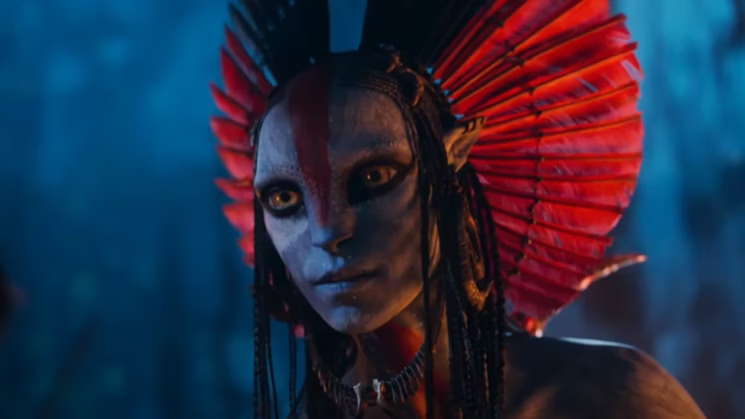
In Fire and Ash, we see the story continue from where Way of Water left off. Narrated by Lo’ak, the story starts off with showing how the grief of Neteyam’s death has affected the Sully family, specifically their remaining son. We are also introduced to a new antagonist, Varang, who leads the Mangkwan clan. They occupy a unique biome covered in ash due to volcanic eruptions and forest fires. Through the impactful acting of actress Oona Chaplin, we are able to see the effect of forest fires on these Na’vi people and how that pushed them to pursue destruction.
During its opening weekend alone, Fire and Ash made $343 million. Although an impressive number, it was expected to surpass the amount made from Way of Water during its opening weekend. Despite this, Avatar fans worldwide expressed their love and support for the new movie.
When I went to see it in theaters on Dec. 22, I was beyond excited to finally see my favorite characters on the big screen again. Although taking more than a decade after the first movie to make the second, technological advancements allowed James Cameron to make Fire and Ash in just three years. Although a significant time cut, I noticed no difference in the quality of the visuals or the movement and facial expressions of the characters. If anything, they had gotten more detailed than I remembered.
As for the plot, the introduction of a new and morally ambiguous character such as Varang allowed for the movie to seem fresh and new when you first saw it. The actions and motivations behind Varang and her clan were different from that of Quaritch and the human crew who wished to destroy the forest and exploit it for money. Even with the introduction of a new villain, many fans argued that the plot of the second and third movie were nearly identical. It begins with distress for the Sully family and a game of cat and mouse with Jake and Quartich running after each other, with crucial characters dying at the end of both movies.
A notable death was that of Quaritch at the end of Fire and Ash, which had everyone in the theater silent with shock. Although I was extremely surprised that they would kill off one of the main villains in the Avatar franchise, I later found out that James Cameron intends for Quaritch to always be the main antagonist in the Avatar movies, meaning that he didn’t really die and will make a comeback in the next movie.
Although I would have to agree with the fact that the plot of the two movies were both extremely similar, I personally did not mind it due to the other subplots that made Fire and Ash interesting. One particular character that I found became essential to the plot of this movie was Spider. Spider’s character has always been the crucial connection between Quaritch and Jake, helping to calm things down when they got too out of hand. But in Fire and Ash, he plays an even more critical role when he gains the ability to breathe the air on Pandora and starts growing a kuru, the tail-like appendage entwined into the Na’vi’s hair. I was especially intrigued by the scene where Spider was almost killed by Jake himself due to his new powers being a threat to the Na’vi and their wellbeing.
I personally find the character of Spider an overriding addition to the group of characters and specifically the Sully family, as he adds intrigue and specifically forces Neytiri to investigate the hate that she has towards humans and how it affects her in her family. One of my favorite scenes in the movie is the confrontation between Jake and Neytiri when he asks her if she hates her children like she hates Spider, as it showcases deep emotion and the origin of Neytiri’s
Aside from the new villain and her motives, I also loved the movie for its deep insight into the character of Lo’ak. After the death of his brother, he is mainly blamed by Jake and Neytiri for putting his older brother in danger and costing him his life. This causes Lo’ak to become closed off and go into a depressed state, even almost committing suicide towards the end of the movie. I appreciated being able to see a true reaction to losing a loved one, as I expected the movie to make it seem like Lo’ak would be sad for a while but eventually step up and save the day. This honest depiction of loss and grief made the family dynamic of the Sully’s seem all the more real.
Overall, I loved “Avatar: Fire and Ash” and was really glad to see the characters again after the ending of the second movie. In spite of possible repetition of story lines throughout the franchise, it remains one of the most colorful depictions of an alien species and one of my favorite movies.