
By Bethany Nguyen
Disclaimer: this article is written from the point of view of a former carrier pigeon.
I remember when humans used to look at me like I mattered. Not like now, when they vehemently shoo me away from outdoor cafes. Once upon a time, I was the infrastructure of their world.
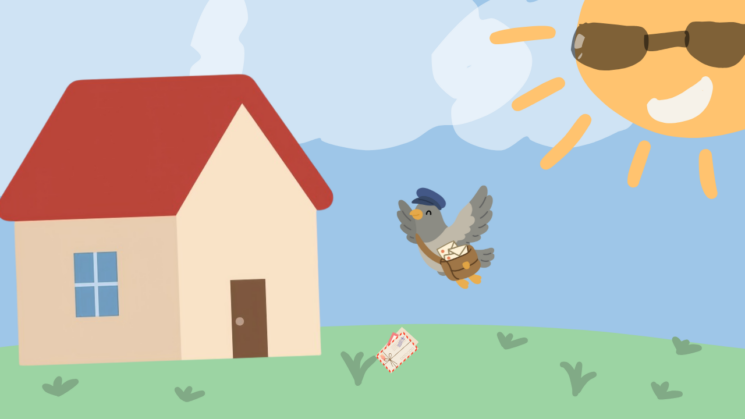
Originating from the rock dove thousands of years ago, a long line of carrier birds was born. Humans domesticated this bird to serve as messengers dating as far back as 1350 B.C.E. in ancient civilizations. Due to our natural homing instinct, we were efficient for the time being.
My history was one that lived with the greats: Genghis Khan, the Mesopotamians, the Roman Military, Julius Caesar and even the military generals of WWI and WWII. We would be raised in one location, imprinting it as our “home base.” Then, when transported to any other location, we knew where to fly back to.
However, when faster, shinier forms of communication were developed, our purpose diminished. We were outshined by mailed letters and e-mails, and don’t even get me started on iPhones.
As the world advanced, birds like me were left behind and forgotten. Some of us escaped, some were released and others were simply left to fend for themselves with no care and no warning. We didn’t know how to survive without humans; we were born to be around and serve them.
So to this day, you can find me perched on a street light overlooking busy intersections or flying above bustling communities. When I waddle around restaurant patios, it’s not because I want to be a nuisance, but because I feel safe and comfortable around humans–a trait inherited from my domesticated ancestors.
My story isn’t just about pigeons. It’s about what happens when usefulness becomes the sole measure of worth. Throughout history, humans have built systems and structures to serve specific needs, only to discard them when advancements rendered them inconvenient. Livelihoods are uprooted by development, workers are replaced by systematic machines and the fight for rights becomes less and less dire to those granted them. Like pigeons, many are shaped by purpose but are forgotten when changing circumstances fulfill that purpose easier.
While progress is painted as a one-way forward-moving track, it leaves behind ignored responsibility and obligation to those who once served an important role. Next time you see a pigeon, I advise you to stop yourself from seeing a dirty pest, but to see living proof that progress without care can not only create new futures, but can forget the past.