By Betty Kaldas
If you’ve watched your parents bring in the mail recently, you may have noticed a white and orange envelope sticking out of the pile of letters and advertisements. This envelope, like many others, may get swept aside or left on your kitchen table until someone throws it away. What’s inside this envelope, and why should we pay attention to it?
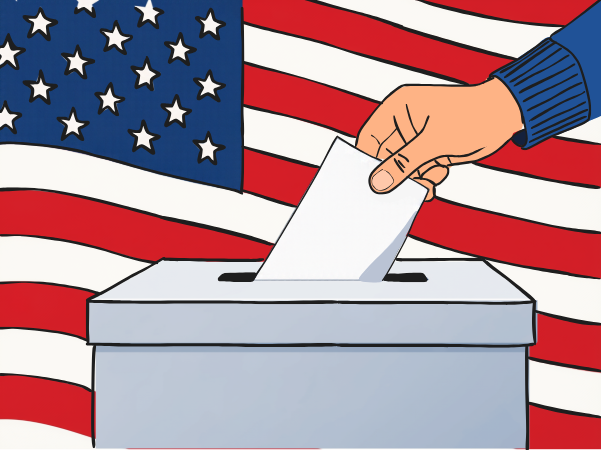
As November approaches, you may have noticed campaign posters, signs and banners hung up all over the city of Fountain Valley and neighboring communities. Some have names in large fonts and bright colors while others describe certain propositions you may have seen through advertisements on television or the internet. These names and propositions all have a common place on the 2026 midterm elections ballot, the folded paper found in that orange and white envelope.
While presidential elections occur every four years, midterm general elections occur halfway through a presidential term. Instead of a presidential race, members of the United States Congress, consisting of the House of Representatives and the Senate, are up for election alongside a handful of propositions that may modify certain state policies.
This year, propositions are offered on a variety of topics such as taxing the wealthy, public funding for schools and improvements for more affordable housing. Find out more information on some of the midterm elections propositions.
As for the Congress members on the ballot, 35 of the total 100 Senate seats and all 435 House of Representatives seats are up for election. 33 of the Senate seats are up for general election while two of them are for special election.
While some high school seniors may already be 18 and are allowed to vote, the majority of the student body is under the age of 17. This makes events such as the midterm general and presidential elections something students can only speculate about rather than participate in. So what makes this midterm election important, and why should high school students pay attention to it?
While the Republican party currently controls both sides of Congress, an increase in just four Democratic votes in the Senate and two Democratic votes for the House would cause a complete power shift.
With the last time the Democrats having control of both houses of Congress being in 2021, the Democrats having a supermajority would cause immense changes to the greater part of the laws passed until the next midterm election. A few of those laws could potentially affect public schools, including but not limited to issues regarding funding, government assistance and student rights.
While a variety of propositions appear on the ballot every midterm election, it remains crucial to be educated on each one, particularly those which affect students directly.
Model United Nations teacher Julie Chaicharee speaks on the importance for students to pay attention to the midterm elections.
“Everything that’s happening right now will affect [students], and whoever is getting elected to Congress will either approve of the administration or refute it,” Chaicharee said. “But it’s important for students to understand what’s going on, and this is why government is so vital to every senior and junior.”
Those who have turned 18 are highly encouraged to vote, as they are finally of age to voice their opinion on who should be elected to Congress as well as federal and state policies.
As for those below 18, while it’s true they cannot vote yet, there are still a variety of things a student can do to remain involved and educated on the political state of the world. Ensuring that your parents, siblings and relatives who can vote stay informed of the difference they can make during the midterm elections is the most impactful way a student can encourage others to vote. Other methods to staying involved, such as peaceful protesting or sharing posts on social media, are great ways to keep your community informed.
“I hope that students also understand that voting is important because we’re finally at the point that we’re a democracy, and everybody has the right to vote,” Chaicharee said. “They should vote. They should not throw [the chance] away because there’s so many people that want to vote, but can’t.”