
By Jeremy Vu
You might’ve seen ads for Proposition 40, but what is it actually about?
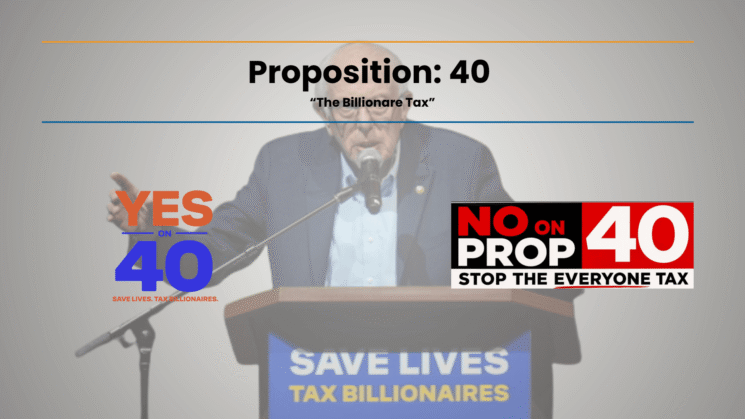
Prop 40 is a one-time 5 percent wealth tax applied to billionaires that is directed towards a fund for healthcare, education and food assistance. Citizens of California will begin voting on Prop 40 and other propositions during the midterm elections on Nov. 3, 2026.
What will Prop. 40 do to help California?
According to reports on Proposition 40, 90% of the revenue collected from the taxes will be distributed to general healthcare and payments, including Medi-Cal, health coverage programs and other services. If it goes into effect, more than 10 million people could benefit from it. The other 10% will be given to food assistance programs such as CalFood, CalFresh, CalFAP and programs for free school nutrition. This funding toward food programs will grant low-income families stability and support.
What reasons do we have for implementing Prop. 40?
In 2025, United States President Donald Trump signed the “Big Beautiful Bill Act” which limited nutrition and health care services for many individuals by raising more requirements to be eligible, including those in California. Prop 40 aims to combat these federal budget cuts by directing tax from billionaires to these programs.
By taxing billionaires, we can help prevent food insecurity and provide healthcare to low-income communities through the tax revenue from Prop 40 that will be stored in the “2026 Billionaire Tax Reserve Fund,” which will bring about 100 billion dollars over the next five years.
What reasons do we have for opposing Prop. 40?
Voteno40.com says that the billionaire tax can be applied to everyone, meaning it can target your earnings, including retirement and income. According to abc7news.com, other critics of Prop 40 such as Planned Parenthood Affiliates of California and California Professional Firefighters say it will result in a lower tax revenue in following years. Additionally, Voteno40.com also says the top 1% pay around half of tax revenue, so it isn’t worth trying to possibly incentivize them to leave.
What does this all mean?
As voting day approaches, critics of Prop 40 mainly argue about the long-term effects of the wealth tax, while advocates of Prop 40 argue nutrition and healthcare services require funding to fill in deficits caused by federal legislation.