
By Katherine Rasmussen
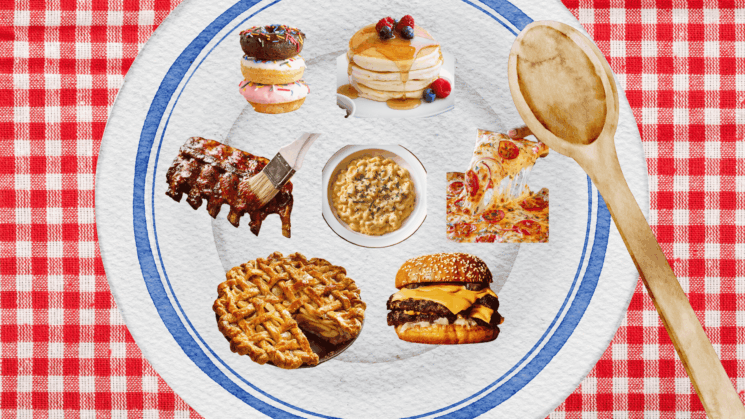
If you ask someone to name “American food,” you’ll probably hear answers like burgers, hot dogs, pizza, fries, maybe even apple pie. These foods feel deeply tied to American identity, showing up at backyard barbecues, sporting events and holidays. But if you look a little closer, that idea starts to fall apart. The truth is, there isn’t really a single, pure category of “American food.” What we call American cuisine is actually a blend of influences from all over the world, shaped by immigration, cultural exchange and adaptation over time.
The United States has often been described as a “melting pot,” meaning people from different cultures come together and create something new. That idea applies perfectly to food. As immigrants arrived from Europe, Asia, Latin America and beyond, they brought their cooking traditions with them. Over time, those traditions mixed, changed,and adapted to new ingredients and tastes. The result wasn’t the preservation of one culture’s food, but the creation of something layered and hybrid.
Take the hamburger, for example. It’s often seen as one of the most iconic American foods. But its roots trace back to Germany, specifically the city of Hamburg, where minced beef dishes were popular. German immigrants brought versions of this dish to the United States in the 19th century. In America, it evolved into the hamburger we recognize today, served on a bun with toppings like lettuce, tomato and cheese. It didn’t start as “American,” it became American through change.
Pizza is another great example. Today, it’s practically a staple of American life, from school lunches to late-night takeout. But pizza originated in Italy, particularly in Naples. Italian immigrants brought it to cities like New York, where it transformed. American pizza became larger, cheesier and more varied, leading to styles like New York thin crust and Chicago deep dish. Again, it’s not purely American, it’s an Italian idea reshaped in an American context.
Even something as “traditional” as apple pie has global roots. Apples themselves aren’t native to North America, they were brought over by European settlers. The concept of fruit pies also comes from European baking traditions, especially from England. So while apple pie is often used as a symbol of American culture, its ingredients and methods are imported.
Hot dogs follow a similar story. They’re closely linked to American events like baseball games, but they trace back to sausages from Germany and Austria. Immigrants adapted these sausages in the United States, eventually serving them in buns for convenience. What feels like a classic American food is really another example of cultural blending.
This pattern shows up again and again. French fries are linked to Belgium and France. Fried chicken has influences from Scottish frying techniques and West African seasoning traditions. Tacos, now extremely popular across the United States, come from Mexico but have been adapted into countless Americanized versions.
What makes these foods “American” isn’t that they originated here. It’s that they were changed here. American cuisine is defined less by where foods come from and more by what happens to them after they arrive. Ingredients are substituted, flavors are adjusted, portions get bigger and entirely new variations are created. It’s a process of reinvention.
So instead of thinking of American food as a single tradition, it makes more sense to see it as a collection of stories. Each dish carries pieces of different cultures, histories and people. The melting pot idea doesn’t erase those origins, it combines them into something new.
In the end, saying there’s “no such thing as American food” isn’t a criticism. It’s actually what makes American cuisine unique. It’s not defined by purity or tradition, but by diversity and change. American food is global food, remixed.